Service
Gutter Installation Service
New sections in factory colors that match or refresh the trim, fitted and sealed by a crew.
See prices and detailsPaint sticks to metal only when the surface is clean, dull and primed. The full prep sequence, plus color matching.
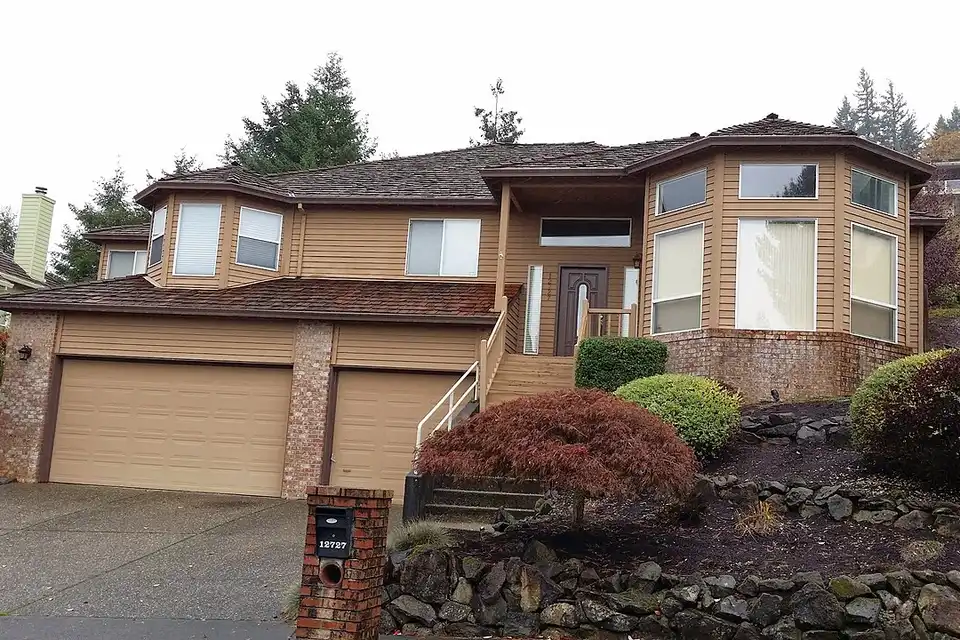
Photo: Exterior Painting Clackamas-Cascade Painting and restoration by Carl Nurmi, via Wikimedia Commons, CC BY 3.0.
Homeowners ask can you paint gutters when a new section clashes with the old ones, when the factory finish has gone chalky, or when a house color change leaves white channels stranded on a dark facade. The short answer is yes: painting gutters is a normal, lasting job on aluminum and steel, and a workable one on vinyl with care. What decides success is not the paint. It is the cleaning, scuffing and priming that happen before the first coat.
Yes, metal and vinyl runs can be painted. Wash off all dirt and chalk, scuff the glossy factory finish with a fine pad, prime bare or weathered metal with a metal primer, then apply two thin coats of exterior acrylic paint. Skipping the wash or the primer is what makes paint peel.
Aluminum is the best surface of the group. Its factory finish is paint like already, so once it is clean and dull, new paint bonds well and the result looks like a factory color. Galvanized steel also paints well after the oily new surface has weathered or been washed with a prep cleaner, and a rust spot must be sanded to bare metal and primed or it will bleed back through within a season. Copper is normally left to age on purpose, and painting it is rare.
Vinyl is the cautious case. Paint for gutters in vinyl formulas exists, and it works if the shade stays light, since dark colors heat the plastic and can warp a section on a sunny wall. Readers in northern states ask the same question as can you paint eavestroughs, and the answer travels: same materials, same prep, same limits. If the vinyl is already chalking, cracking at the joints or sagging between hangers, paint is money spent on a system at the end of its life.
Start with a wash. Scrub the outside face with a detergent cleaner and a soft brush to remove dirt, mildew and the black tiger stripe streaks that run down the face. Rinse well and let the metal dry fully. Next, scuff: a fine abrasive pad over every inch of glossy finish gives the primer something to grip. Wipe the dust off with a damp cloth.
Paint gutter runs in place from the ladder, in sections you can finish without leaning far. A small brush gives the most control on the face and lip. Gutter spray paint in a matching shade is handy for short repair sections and downspout pieces on the ground, where overspray is easy to control.
A brush leaves a smooth, trim like finish and wastes almost no paint, which suits most homes. A small foam roller is fast on long straight faces but can leave a faint texture on glossy metal. Spraying gives the closest match to a factory finish and is the method crews use on new sections in the shop, but at home it needs masking of siding, roof edge and plants, plus a still day. Black gutter paint and other dark shades show every lap mark and dust speck, so spray or very careful brush work matters more with them. Whatever the method, keep paint out of the inside of the channel: the interior is left as it is, and paint ridges inside only give debris something to catch on.
The classic paint problem is the mismatch after an install: one bright new run beside older sections that have faded a shade or two, or a replacement corner in a white that is not quite the house white. Painting house gutters to one shade solves it, and so does painting only the new pieces to match the aged ones, which is faster and cheaper. Bring a cleaned chip of the existing finish, or the factory color name, to the paint store and have the shade matched under daylight, not store light.
For the full range of factory shades, black, brown, bronze tones and whites, and how each sits against roof and trim colors, work through our guide to gutter colors and matching before you buy paint. A color that matches the trim makes the system disappear. A color matched to the roof makes it read as part of the roofline. Both are valid; mixing the two logics on one house is what looks wrong.
Paint fixes color. It does not fix shape, slope or metal that is rusted through, pinholed or crushed. If the system leaks at every joint, sags between hangers or has rust eating the bottom of the channel, a paint job is a short disguise on a failing system. In that case the money belongs in replacement: a full new system runs $12 to $25 per foot installed, or $2,200 to $5,000 per home. Treat those published ranges as a guide only, since your price is set after the home is measured and given as an itemized written quote fixed before work starts. A gutter installation service can also supply new sections in a factory color that matches your trim from day one, with no painting needed at all. Paint the sound system, replace the tired one, and the house looks cared for either way.
New sections in factory colors that match or refresh the trim, fitted and sealed by a crew.
See prices and detailsCut and file fresh edges smooth before paint or primer ever touches the metal.
Read the guideThe full install sequence, so a paint plan fits around removal, hanging and sealing.
Read the guideSeal any drips first, since paint over a leaking joint fails from the inside out.
Read the guideBrowse every guide on the Gutter Cleaning HQ blog, grouped by topic.
A high quality exterior acrylic latex over the right primer is the standard choice. On bare or weathered aluminum, start with a primer made for galvanized and non ferrous metal, then two thin top coats. Oil based paint goes brittle on metal that moves with heat, so acrylic holds up better.
Yes, with limits. Clean and scuff the surface, use a paint rated for vinyl, and stay at or lighter than the original shade. Dark paint on vinyl absorbs heat, and the sections can warp in strong sun. Many owners paint vinyl once to buy time, then replace it when it turns brittle.
No, and most painting happens in place from a ladder. Work in short sections, mask the siding and roof edge, and keep a wet edge so lap marks do not show. Taking a run down only makes sense if it is already coming down for repair or rehanging.
With full prep and two top coats, expect the finish to look good for years and to age about like painted trim. Skipped primer or paint over chalky, dirty metal can peel in the first winter. The prep decides the lifespan far more than the brand on the can.
Ask for the factory color list before you order, or get a written quote for replacement sections that match the house.
Call +1 (888) 295-0648