Service
Gutter Installation Service
Full runs measured, cut and fitted by a crew, including corners and downspout outlets.
See prices and detailsSquare, smooth cuts are what let joints seal and stay sealed. Tools by material, the downspout method, and the outlet hole.
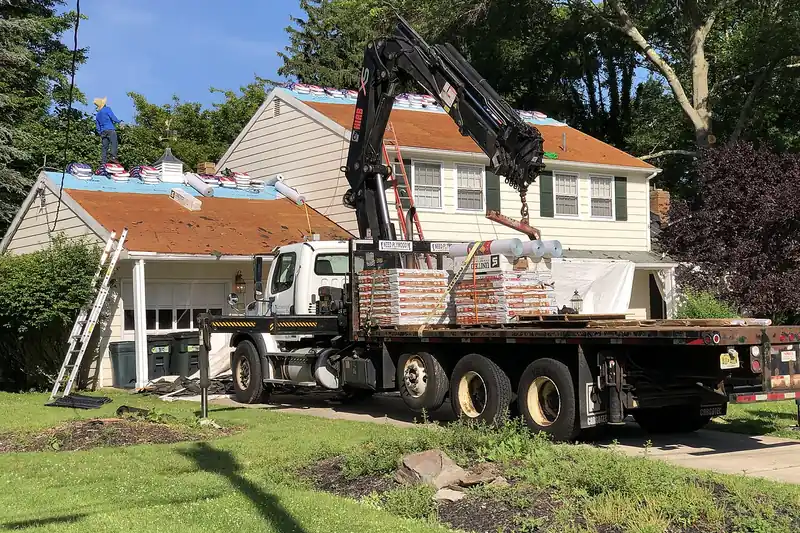
Photo: 2022-06-15 08 41 19 Construction workers replacing the roof by Famartin, via Wikimedia Commons, CC BY-SA 4.0.
Clean cuts are the quiet secret of a system that does not leak. When you learn how to cut gutters square and smooth, connectors sit flat, sealant presses into a thin even film, and joints stay closed through heat and freeze. A ragged cut does the opposite: it holds the joint open, tears the sealant bead, and leaves a sharp lip that catches leaves. The tools are cheap and the method is short. The care is in the marking.
Cut aluminum sections with aviation snips or a fine tooth saw in a miter box, working from the open top and supporting the profile so it does not fold. Mark with a square, cut a hair long, file the burrs smooth, and dry fit every joint before sealant goes on.
Match the tool to the material and the job gets simple. For how to cut aluminum gutters, the standard home choice, aviation snips handle straight trims and short sections well, and a hacksaw or a power miter saw with a fine tooth blade gives the squarest long cuts. Cut from the open top of the profile down, and support the channel on a block of wood so the thin walls do not bend or oil can under the blade.
Vinyl cuts with snips or a fine saw and needs almost no force, but it chips if you rush a saw through a cold section, so let the blade do the work. Galvanized steel is the hard case: use a hacksaw with a fresh fine blade or a cut off wheel, wear eye protection, and file and coat the bare edge afterward. Northern readers asking how to cut eavestrough sections are working with the same metals under another name, and the same tool picks apply.
Measure the run, then mark the cut line all the way around the profile with a small square and a marker. A line that only crosses the bottom leaves the back and front lips to guesswork, and the cut wanders. Cut a fraction long on purpose. You can file or trim a long end down to a perfect fit in a minute; a short piece cannot be stretched, and a gap at the connector is a leak waiting for its first storm.
How to cut gutter downspout pipe follows the same rules with one twist: downspout is a closed tube, so snips tend to crush it. A hacksaw or fine tooth saw around a marked line keeps the tube round. Cut a hair long, then crimp the end that must slide into the next piece or elbow. Factory downspout ends are crimped for this reason, and a hand crimper is a cheap tool that makes every joint below the cut fit tight without screws alone doing the work.
Plan the pipe length from the outlet to the ground elbow in one measurement, allowing for the two top elbows that offset the pipe back to the wall. Cut the straight pipe last, after the elbows are held in place and the true length is known. That order, elbows first and pipe to fit, is why fitted systems look neat instead of patched.
Knowing how to cut downspout hole in gutter stock cleanly matters more than any straight cut, because this hole carries all the water. Mark the outlet position at the low end of the run, trace the outlet tube opening, and drill a starter hole inside the line. Cut the opening with snips or a jigsaw, staying just inside your mark, then set the outlet in and check that its flange covers the cut edge all the way around.
Seal under the flange, set the outlet, and rivet or screw it as the system directs. A hole cut too large leaves the flange bridging a gap, and that joint will drip no matter how much sealant is piled on top. A hole cut snug, with the flange pressed onto a thin bead, is watertight for years. Test it with a bucket of water poured at the high end before the run goes up for good.
The best way to cut a gutter is slowly, but mistakes still happen and most can be saved. A crooked end can be retrimmed square if you left the piece long, which is the practical reason for cutting long in the first place. A burred edge files smooth in under a minute. A piece cut truly short can still serve on a shorter run elsewhere on the house, on a porch or a shed, so set it aside rather than forcing it into a joint with a thick wedge of sealant.
If cutting and fitting a whole house feels like more bench work than you planned, that is a fair point to price the hired version: installation and replacement runs $12 to $25 per foot installed, or $2,200 to $5,000 per home. Use those figures as a guide only, since the price for your home is set after measuring and given as an itemized written quote fixed before work starts. A booked gutter installation service forms seamless runs on site to the exact length, which removes most field cuts and most joints in one step.
Full runs measured, cut and fitted by a crew, including corners and downspout outlets.
See prices and detailsWhere cutting sits in the full install order, from first measure to the final water test.
Read the guideOnce the lengths are right, hang them on a true slope line with hangers that hold.
Read the guideFresh cut edges and new sections finished to match, with the prep that makes paint stay.
Read the guideBrowse every guide on the Gutter Cleaning HQ blog, grouped by topic.
Trimming a small amount in place is possible with snips, but it is awkward, the cut is rarely square, and metal filings fall into the channel. For any real length change, drop the section, cut it on a bench or sawhorses, and rehang it. The result is cleaner and faster.
Galvanized steel needs a fine tooth hacksaw blade or an abrasive wheel on a cut off tool, and the cut edge should be filed and touched with cold galvanizing spray. Snips will chew steel and tire your hand. Aluminum and vinyl are far easier on hand tools.
A burred or slightly short cut is the usual cause. Burrs hold the connector off the metal so the sealant cannot press flat, and a short piece leaves a gap the bead has to bridge. File the edge smooth, dry fit the joint, and only then add sealant.
Old houses often have corners a few degrees off square. Measure the true angle with a bevel gauge or by holding the miter piece in place and marking it, then cut to the mark rather than to a factory angle. Sealant covers a hairline gap; it cannot fix a wedge.
Send the measurements you have and get an itemized written quote for a fitted system, with every cut and corner listed.
Call +1 (888) 295-0648