Service
Gutter Installation Service
New runs in a factory finish matched to your trim or roof, confirmed from a sample before fitting day.
See prices and detailsMatch the trim, the roof or the siding? The three honest routes to a shade that looks settled, plus how to dodge a mismatch.
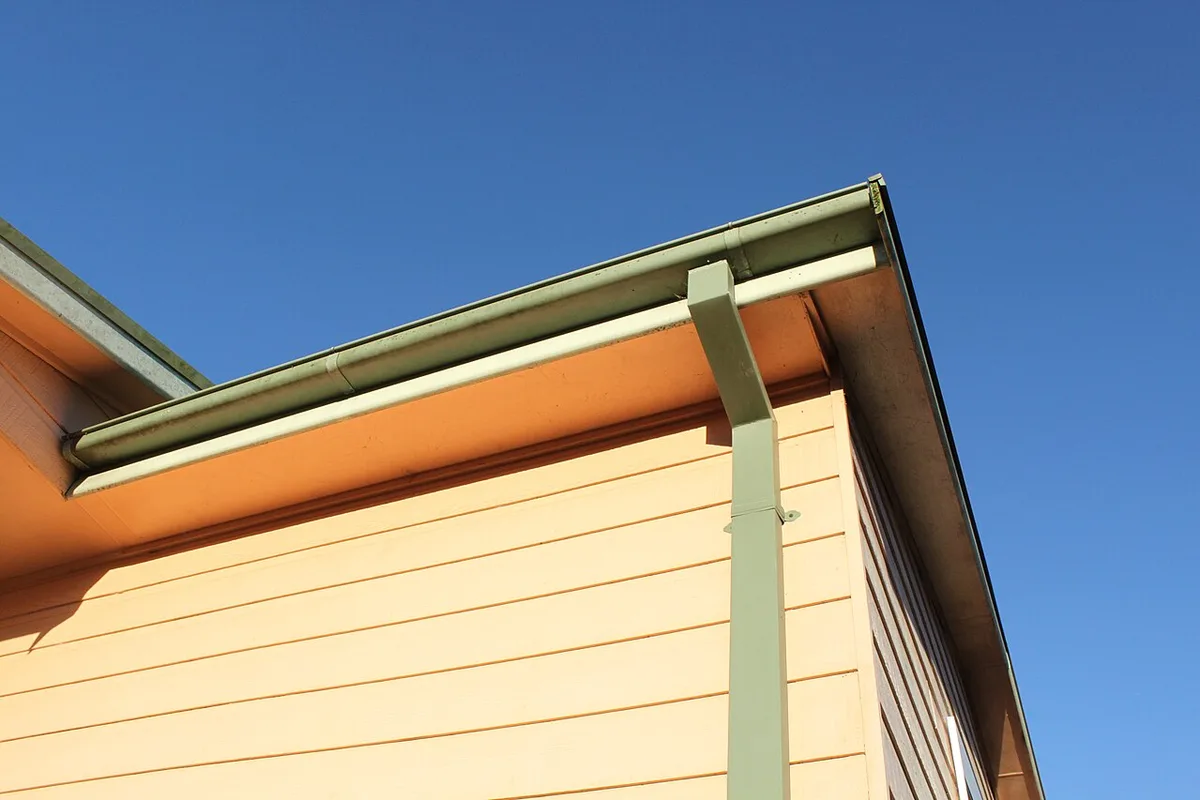
Photo: Rain gutter and drain pipe (25921162725) by Jeremy from Sydney, Australia, via Wikimedia Commons, CC BY 2.0.
Of all the choices on a new gutter job, gutter colors are the one you will see every day from the driveway, and the one owners most often pick in a hurry from a tiny chart. The shade decides whether the new runs settle into the house or sit on it like a stripe. This guide sets out the three matching routes that work, how to use black and white well, and how to avoid the mismatch that ruins an otherwise good install.
Pick a shade by matching one element of the house: the trim, the roof or the siding. Matching the trim is the safest and most common route. Black suits pale houses and modern styles, white suits classic trim, and mid tones like brown hide dirt best. Always judge a physical sample outdoors, never a screen.
A gutter run is a long horizontal line at the edge of the roof, and the eye reads lines before it reads anything else. A shade close to the trim or fascia color makes that line quiet, so the roofline looks like one finished edge. A shade that clashes with everything near it makes the line shout, and the house looks like it is wearing a stripe it never chose. Neither is always right. Some homes look sharp with a bold dark line. The point is to choose the effect, not to stumble into it.
Remember that the channel is only half of what shows. Downspouts run down the wall in full view, and their color often matters more from the street than the channel color does. A well matched channel with clashing downspouts still looks unfinished. Plan both pieces together, every time, and check the plan from the far side of the street, which is where the house is mostly seen from.
Matching the trim is the classic route and the hardest to get wrong. If your fascia, window frames and corner boards are one color, carrying that same color onto the channel makes the whole edge read as one piece of trim. It suits traditional homes best and it hides the system, which is what most owners quietly want. The one trap is whites: trim white and channel white are often two different whites, and side by side in sun the difference shows. Samples settle it.
Matching the roof is the bolder route. A dark bronze or charcoal channel under a dark shingle or metal roof extends the roof visually and gives the house a lower, heavier top line. It works well on modern homes, on cabins and on houses where the roof is a feature worth extending. It works badly when the roof is mid toned and weathered, because a fresh, even channel color next to a faded roof makes the roof look tired. If the roof will be replaced within a few years, wait, or pick the trim route instead.
Matching the siding makes the system nearly vanish, and it is the route to choose when the roofline is busy with dormers, valleys and short runs that would look messy outlined in a contrast color. Brick homes often take this route with a shade drawn from the mortar or the deeper brick tones. The system still shows in shadow and outline, but it stops competing with the house.
Black gutters deserve their own word, because black is the most searched shade in this whole topic. Black gutters on a white house give that crisp farmhouse outline that photographs so well, and black on dark siding looks calm and modern. The honest costs of black are heat and honesty: dark metal runs hotter in summer sun, and black shows every drip streak, pollen film and drip line more clearly than any mid tone. Brown gutters and other mid tones are the forgiving middle, hiding dirt and streaks better than either black or white while still reading as a deliberate line. Choose black for the look, with eyes open about the cleaning.
A gutter color chart is a starting point, not a decision. Printed charts shift with the ink, phone screens shift with brightness, and a color sample the size of a stamp tells you little about a 40 foot run in full sun. The routine that works is simple: narrow the chart to two or three shades, get real metal samples of those finishes, and tape them to the fascia for a full day. Look at them in the morning, at noon and in the evening, from the street as well as from below.
Color mismatch after an install is one of the most common complaints in this trade, and it almost always traces back to a chart pick with no sample, or a color agreed in words and never written down. The sample and the written code cost nothing. A rehang costs a great deal.
Most metal runs arrive with a baked on factory finish, and that finish will outlast any paint applied later on site. If your shade exists in the factory range, take it. Site painting is the route for matching an unusual trim color or refreshing sound older runs, and it needs proper prep: a wash, a light sand, a metal primer and an exterior topcoat, in that order.
On price, standard factory shades are normally part of the standard installation band, published at $12 to $25 per foot installed and $2,200 to $5,000 per home. A published range is a guide only. Your actual price is decided after your home is measured, and it should come back as an itemized written quote fixed before work starts, with the color name and code written on it. Our gutter installation service page explains what the fitting visit covers. If a special order shade adds a charge or a wait, that should be on the quote in plain words before you sign, not a surprise on fitting day.
New runs in a factory finish matched to your trim or roof, confirmed from a sample before fitting day.
See prices and detailsSettle the profile and material first, then use this color guide to finish the choice.
Read the guideThe profile whose crown shaped front face shows color most clearly from the street.
Read the guideThe metal that carries the widest range of factory colors, with its care needs explained.
Read the guideBrowse every guide on the Gutter Cleaning HQ blog, grouped by topic.
Dark shades show fading and chalking sooner than pale ones, especially on walls that take full afternoon sun. Factory baked finishes hold up far better than site paint. If you love a dark shade, choose it in a factory finish and expect the sunny side to age a little ahead of the shaded side.
Most homes look best when downspouts match the wall behind them, so the pipes fade into the siding, while the channel matches the trim line. On brick, a downspout in a mortar or shadow tone nearly disappears. The goal is one clear line at the roof edge, not stripes down the wall.
Yes, if the metal is sound. A wash, a light sand and a metal primer followed by exterior paint will change the shade for far less than new runs. Paint will not fix dents, tired sealant or a poor slope, so sort those first or the fresh color just highlights them.
Ask for a physical sample of the exact finish and hold it against the existing runs in daylight before fitting day. Finishes with the same name vary between brands and batches. If a match proves impossible, replacing in full wall runs, rather than part runs, keeps the difference out of sight.
Ask for a sample of the finish you are considering and check it against your trim in morning and evening light before you order.
Call +1 (888) 295-0648