Service
Gutter Cleaning Service
Full system cleaning with downspouts flushed, debris hauled away, and the price in writing before you book.
See prices and detailsCurved tubes that turn a leaf blower into a ground level gutter tool: the fit, the technique, and the wet debris limit nobody prints on the box.
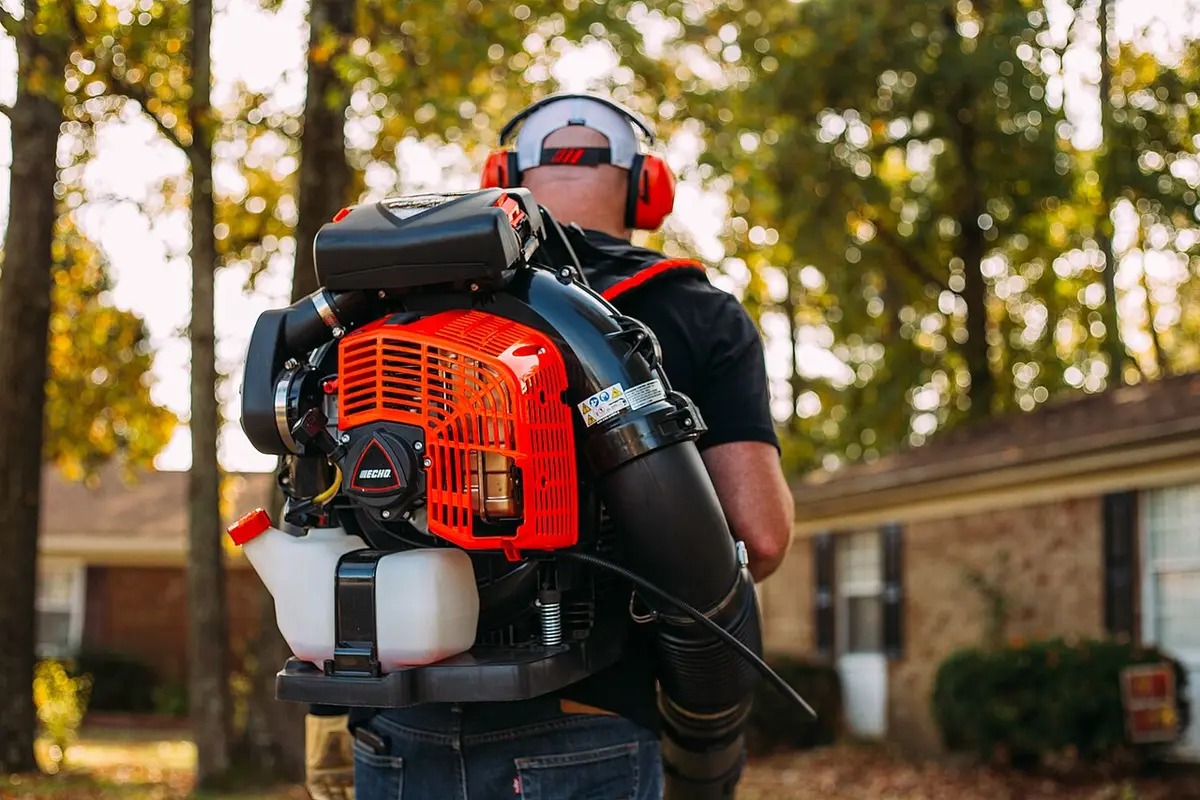
A leaf blower gutter attachment sounds like the perfect shortcut: snap curved tubes onto the blower you already own, stand on the lawn, and blast the leaves out of the channel. Sometimes that is exactly how it goes, on a dry week with a one story home and loose leaves. Other times the kit meets a wet mat of sludge and loses badly. This straight guide covers how the kits fit and work, which blowers and roof shapes they suit, the technique that gets the most out of them, and the limits to plan around before you spend anything.
A blower gutter kit is a set of extension tubes and a curved nozzle that aims your blower output into the channel from the ground. It clears dry, loose leaves quickly on one and two story homes. It cannot shift packed wet sludge, and it does not flush downspouts, so pair it with a hose.
Kits come in two broad forms. Universal kits use a flexible connector and adapters to clamp onto round blower tubes of many brands. Brand matched kits are molded for one maker tube shape and seal tighter, which matters because every leak at a joint is air pressure you lose at the nozzle. If your blower has a square or oval tube, the brand matched kit is usually the only honest option.
The working end is a curved nozzle, often shaped like a candy cane, that hooks over the gutter edge and points the air stream along the channel. Extension tubes stack between the blower and the nozzle to set the reach. More tubes mean more height and more sway, so buy the length your eave needs and no more. A kit stretched past its comfortable reach is hard to aim and tiring to hold.
Power matters too. The kit does not add force, it only redirects what your blower makes. A small handheld blower that struggles with wet leaves on the drive will struggle more at the end of twelve feet of tube. Strong handheld and backpack blowers drive these kits best.
The idea is simple. Air travels up the tubes, turns at the curved nozzle, and runs along the channel floor, pushing loose leaves ahead of it. You walk slowly along the wall and the debris piles move with you, spilling out at the end of the run or dropping at the downspout opening.
That flow explains both the strength and the weakness of the method. Dry leaves are light, curled and full of air gaps, so the stream gets under them and lifts. Grit and sand sit flat and heavy, so the stream skims over them. Anything wet clumps into a mat that air cannot grip. The kit is a broom powered by air, and like a broom it moves what is loose and rides over what is stuck.
One more piece matters: your eyes. From the ground you cannot see into the channel, so work a section, then check it from an upstairs window or with a phone camera on a pole. Blowing blind leaves a tidy looking roofline with a ridge of grit still sitting in the middle of the run.
Plan blower work for a dry spell, ideally a few days after the last rain, when the load in the channel has dried out. In that window the kit is genuinely fast: a one story ranch can be walked in a fraction of the time a ladder job takes, with no climbing at all. Autumn, right after leaf fall and before the rains pack everything down, is its best season.
After rain, reset your expectations. Wet leaves mat together, sludge sticks to the channel floor, and pine needles weave into a layer that air slides across. The kit will still tidy the top and blow out the loose corners, which has some value as a touch up between real cleans. Just do not mistake it for the clean itself. The heavy layer keeps holding water against the metal, and that is the layer that causes the harm.
Downspouts are the other gap. Blowing debris toward the outlet can pack the top elbow tighter, and air pressure will not clear a plug sitting lower in the pipe. Finish every blower session with a hose flush from the top of each downspout, and watch for a strong stream at the bottom. Standard sizes are 2 by 3 inch and 3 by 4 inch, and both plug at the elbows first.
Short, controlled bursts help around hangers and seams, where a steady blast can rattle a loose fitting. If you hear the channel buzzing or see a section shake, ease off and move by hand or pole instead. The tool should never be the reason a sound gutter needs a repair.
The close cousin of the blower kit is the gutter cleaning hose attachment: a curved wand on a telescopic tube that washes the channel with water instead of air. Water wins on grit and fine sludge, which it floats and carries to the downspout. Air wins on dry volume. Many owners end up using both in sequence, blower first for the leaves, wand second for the grit, hose last in the downspout.
Pole scoops and vacuums fill the remaining gaps. A scoop on a pole lifts the packed loads that defeat air and water alike. A vacuum tube set pulls dry leaves out without scattering them across the beds. None of these tools inspects seams, reseats hangers or clears a solid downspout plug, so ground kits work best as regular upkeep on a system that is sound.
Ground work removes the ladder risk, not all risk. Debris falls on the operator, so eye protection is mandatory and a hat helps. Watch for overhead power lines when raising long tube sets, keep the tubes well clear of them, and never use a blower kit in wet conditions with a corded electric blower trailing a cable through puddles.
Hire the job out when the load is packed, the home is three stories, or downspouts plug every season. Hired cleaning for most homes runs $100 to $250 per visit, or $0.50 to $2.50 per foot. A published range is a guide only: your actual price is decided after the home is measured and given as an itemized written quote fixed before work starts. A professional gutter cleaning service brings the ladders, the scoops and the downspout tools, and leaves the blower kit for what it does best, the quick dry touch up between full cleans.
Full system cleaning with downspouts flushed, debris hauled away, and the price in writing before you book.
See prices and detailsThe short list of scoops, tongs, poles and safety gear worth owning, and what you can skip.
Read the guidePole tools, blower kits and hose wands that let you clear a channel with both feet on the lawn.
Read the guideThe ladder method in full, with the setup and work order that keep the job under control.
Read the guideBrowse every guide on the Gutter Cleaning HQ blog, grouped by topic.
Most kits fit round blower tubes with an adapter, and many brands sell a kit matched to their own tube shape. Check the tube diameter and shape before you order, since square and oval tubes need the brand specific version. A loose fit leaks air and kills the push you need at the gutter.
Not well. Air moves dry, loose leaves fast, but a wet mat of leaves and grit behaves like a blanket and barely shifts. After rain, or on a load that sat all winter, expect the kit to tidy the surface and leave the heavy layer behind. Scoop work, by pole or ladder, is still the fix for packed loads.
With extension tubes fitted, most kits reach a two story eave. Control fades as tubes are added, since the nozzle end sways and reaction from the airflow pushes back. One story work is easy and quick. Two story work is slow but doable on a calm day. Beyond that, hire the job out.
Used at working distance, no. The air stream is far gentler than a pressure washer jet. Keep the nozzle moving and a few inches off the channel floor so you do not blast grit under the shingle edge or strip sealant from a seam. Never aim it up under the roofing from close range.
A crew clears wet sludge and blocked downspouts in one visit, with the price in writing first and photos when the work is done.
Call +1 (888) 295-0648