Service
Gutter Cleaning Service
Full system cleaning with downspouts flushed, debris hauled away, and the price in writing before you book.
See prices and detailsPole scoops, hose wands, blower kits and vacuums: what each ground level method clears well, and where each one honestly stops working.
Knowing how to clean gutters from the ground changes the job from a ladder project into a yard chore. Telescopic poles, hose wands, blower kits and long vacuum tubes all promise the same thing: a clear channel with both feet on the lawn. The promise is mostly honest for loose, dry debris on a one or two story home. It gets shaky with wet sludge, packed downspout elbows, and tall rooflines. This guide goes method by method, so you know what each tool clears well, what it leaves behind, and how to work the roofline in a sensible order.
From the ground, work along the roofline with a telescopic pole: pull dry leaves out with a scoop or tongs, rinse grit away with a hose wand, or blow loose debris toward the downspout with a blower kit. Ground tools handle loose loads well, but packed wet sludge and blocked downspouts still need hands on work.
Whatever tool you pick, the order stays the same. Start at the far end of a run and work toward the downspout, so everything you loosen travels in the direction the water flows. Clear the loose top layer first, then rinse or pick out what is left, then flush the downspout last. Working downspout first and pushing debris toward it just packs the pipe you need open.
Move in short passes and check the channel as you go. A phone camera on the pole, or a quick look from an upstairs window, tells you more than guesswork. Ground cleaning fails quietly when a strip of sludge survives in the middle of a run because nobody could see it. Two slow passes beat one hopeful one.
The simplest ground tool is a telescopic pole with a scoop, spoon or tong head. You stand below the eave, raise the head into the channel, and drag or grab debris toward you, dropping it into a bucket or onto a tarp. It is slow, steady work, and for dry leaves in autumn it is often all a one story home needs.
Tongs and grabber heads earn their place around obstacles. Hangers, roof straps and the grit that packs behind them are hard to shift with a flat scoop, while a tong can pick out a wad of leaves in one grab. The tradeoff is feel: at full pole length you cannot tell a loose leaf mat from a solid plug until you pull. Work gently. A hard yank on a stuck load can bend a hanger or pop a seam loose.
A gutter wand is a curved or telescopic tube that connects to a garden hose and hooks over the edge of the channel. Squeeze the trigger and a fan of water washes grit, seed pods and fine sludge toward the downspout. Water fed poles do the same job with a softer brush head for rinsing the channel floor.
Water methods shine on the fine material that scoops leave behind: shingle grit, sand and the thin mud layer that holds moisture against the metal. They struggle with volume. A channel full of leaves turns into a channel full of wet leaves, which are heavier and harder to move. Scoop first, rinse second. Expect to get wet, expect splashback on the siding, and rinse the wall down when you finish.
The wand also doubles as your downspout tester. Feed it into the top opening and run water at full pressure. A strong stream at the bottom means the pipe is open. A trickle or a backup means the plug sits in an elbow and needs more than a rinse.
Wet and dry vacuums with long curved tubes can pull dry leaves straight out of the channel and into the drum, which makes them the tidiest ground method of all. No tarp, no scattered debris, no second cleanup of the flower beds. The limits are weight and reach: a full set of tubes at two story height is heavy and wobbles, and wet sludge clogs the hose fast.
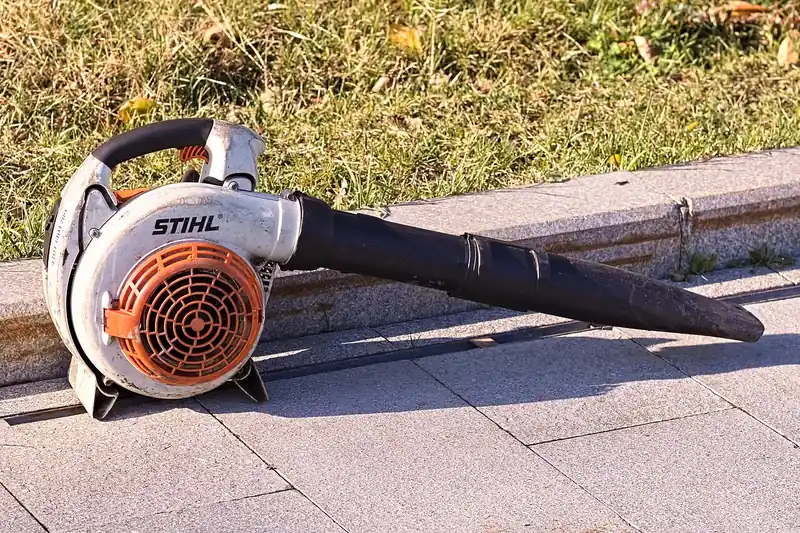
Blowers take the opposite approach, pushing loose debris along the channel and out at the end or down the downspout. They are fast on dry oak and maple leaves and poor on anything damp or packed. Both tools share one rule: they move loose material well and compacted material barely at all. If the load has been sitting since last season, plan on a scoop pass first, by pole or by ladder.
Ground methods have real limits, and naming them saves you a wasted purchase. You cannot see the whole channel, so a careful check pass matters. You cannot scrub sealant, inspect a seam closely, or spot a loose hanger and fix it. You cannot clear a solid downspout plug, and you cannot reseat a run that has pulled away from the fascia.
Height is the other limit. One story eaves are comfortable with any pole. Two story eaves are workable, with wobble and tired arms. Past that, the tool is doing the guessing and you are doing the holding, which is the wrong way around. Ground cleaning works best as the regular habit that keeps a sound system clear, with a close ladder inspection once in a while to catch what the pole cannot see.
A pole, a scoop head and a wand together cost less than one hired visit, and they last for years if you rinse and store them dry. That math favors ground tools for one and two story homes with loose debris. The math flips when the load is packed, the home is tall, or the downspouts block every season, because your time and the leftover risk are part of the cost too.
Hired cleaning for most homes runs $100 to $250 per visit, or $0.50 to $2.50 per foot. Read any published range as a guide: the actual price for your home is decided after it is measured, and given to you as an itemized written quote fixed before work starts. If a season comes when the pole is not enough, a professional gutter cleaning service clears the full system, flushes the pipes properly, and reports anything the ground view missed.
Full system cleaning with downspouts flushed, debris hauled away, and the price in writing before you book.
See prices and detailsThe ladder method in full, with the setup and work order that keep the job under control.
Read the guideThe short list of scoops, tongs, poles and safety gear worth owning, and what you can skip.
Read the guideHow blower kits fit, where they work well, and where wet sludge beats them every time.
Read the guideBrowse every guide on the Gutter Cleaning HQ blog, grouped by topic.
Yes, several. A telescopic pole with a scoop or tong head handles dry leaves well, a water fed wand rinses grit out of the channel, and blower kits push loose debris along the run. None of them matches a hand scoop for packed, wet sludge, which is the honest limit of every ground tool sold.
Most poles and blower kits reach a two story eave with extensions fitted, though the longer the pole, the harder it is to control the head and the less feel you have for what you are moving. One story work is comfortable. Two story work is doable on a calm day. Three story work belongs to a crew.
A hose wand pushed into the top opening can flush a light plug, and water pressure clears most elbow blockages. A solid plug of packed leaves and grit that has sat for a season usually needs the downspout flushed from below or opened up. If water backs up over the top after two or three tries, stop and get help.
The same rhythm as any method: spring and late fall for most homes, with an extra pass for homes under heavy tree cover. Ground tools make the in between touch up easy, since pulling out a pole for ten minutes is a smaller job than setting up a ladder for the whole roofline.
A crew clears packed channels and blocked downspouts in one visit, with the price in writing first and photos when the work is done.
Call +1 (888) 295-0648