Service
Downspout and Drain Cleaning
Blocked pipes and buried drain lines cleared, flushed and tested by a local crew.
See prices and detailsA plugged pipe backs water up and spills it at the top. Test first, work from the bottom, and prove the flow at the end.
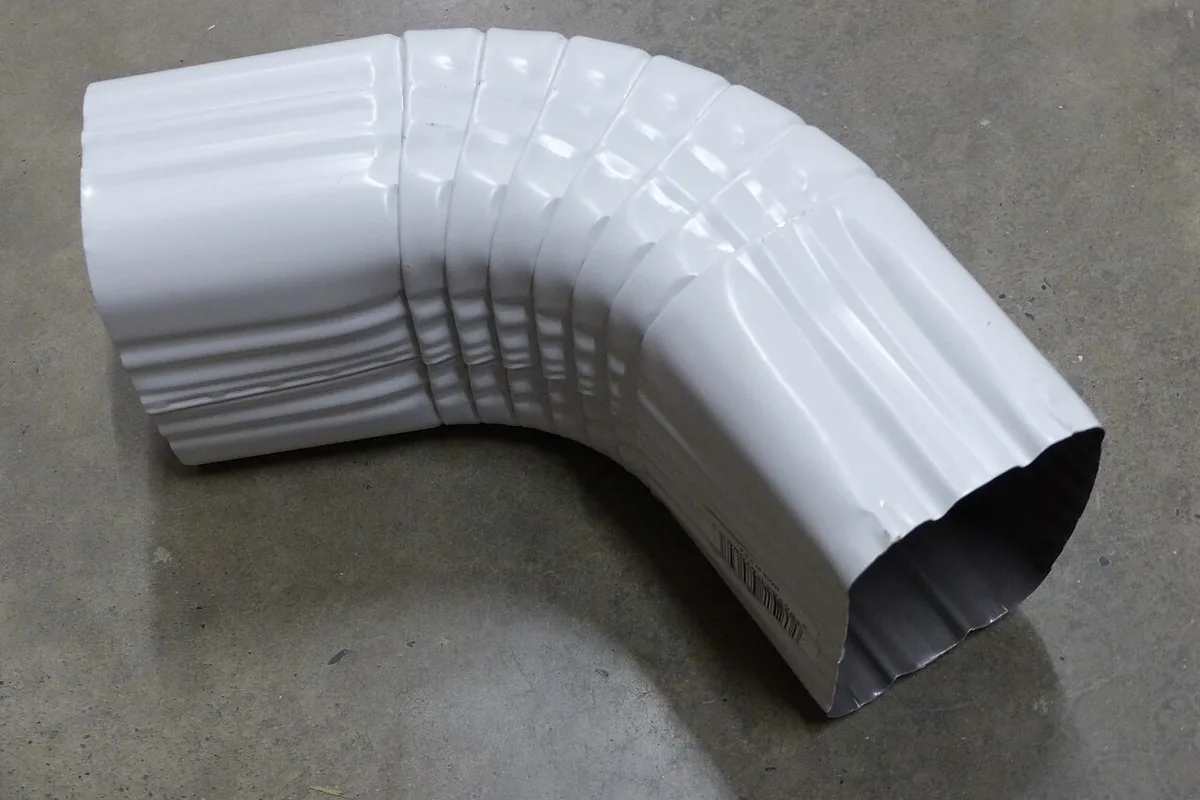
Photo: Downspout Piece 02 by Stilfehler, via Wikimedia Commons, CC BY-SA 4.0.
A downspout can look fine from the yard and still be packed solid inside. Learning how to unclog a gutter downspout starts with knowing the signs: water spilling over the top of the run in rain, a pipe that stays silent while the channel overflows, or a thin drip at the bottom elbow long after the storm ends. The plug is usually at an elbow, where leaves and shingle grit settle and mat together, and the fix is methodical rather than forceful.
Test the pipe with a hose at the top. If water backs up, work from the bottom: remove the bottom elbow, rod upward with a plumbers snake or a stiff wire, then flush from the top until the flow runs strong and clear. Refit the elbow and test again.
Do not start by taking the pipe apart. Start with water. Put a garden hose in the channel at the downspout outlet, or pour a bucket steadily into the outlet, and watch the bottom of the pipe. A strong exit flow means the pipe is clear and the problem is in the channel or the slope. A weak trickle, or water rising in the channel and spilling at the seams, confirms a plug below. Tap along the pipe with a screwdriver handle: a plugged stretch sounds dull and solid, a clear stretch sounds hollow. The top elbow, just under the outlet, is the most common plug site, followed by the bottom elbow at ground level.
Clear the channel around the outlet first, since a mat of leaves sitting over the hole acts like a plug even when the pipe is open. Many calls about how to unclog gutters end at this step, with the pipe innocent and the outlet simply buried under debris.
Set a bucket under the bottom elbow, remove the screws, and pull the elbow off. A surprising amount of sludge often drops out at this point alone. Look up the pipe with a flashlight. Then feed a plumbers snake, a drain rod or a straightened wire upward, twisting as you go, and work the plug loose from below so the debris falls down and out instead of packing tighter. Short, patient strokes beat hard shoving, which can dent the pipe or push the plug into the top elbow.
With the plug broken up, run the hose down from the top outlet at a good flow. The exit stream should come out strong, steady and soon clear. A weak or pulsing stream means part of the plug is still in there, so rod once more and flush again. When the flow is right, refit the bottom elbow, replace its screws, and add a bead of sealant only if that joint had been sealed before. Finish with a full test: hose in the channel at the far end of the run, and confirm the water travels the run, drops, and exits without any joint weeping.
This is also the moment to fix downspout habits that invite the next plug. A strainer basket at the outlet keeps large leaves out of the pipe while letting water through, and it lifts out for cleaning in seconds. It does not replace cleaning the channel, but it turns a packed pipe into a rare event on most homes.
Sometimes the pipe itself clears and the water still backs up. That pattern points past the visible system: the buried drain line that carries water away underground is plugged with roots, silt or a crushed section, or the exit is buried under mulch and soil. A fix gutter downspout job then becomes a drain job. Try a hose jetter attachment worked into the buried line from its exit end, and a drain snake for longer runs. If water will not move at all, stop forcing it, since a split buried pipe dug in blindly turns a small job into a torn up yard.
Prevention is plain: clean the channels twice a year, keep the outlet strainer in place, and trim back branches that drop straight into the roofline. Check the pipe flow during the first heavy rain after each clean; thirty seconds of watching tells you more than any schedule. Homes with large roofs feeding a single small 2 by 3 inch pipe plug more often, and upsizing to a 3 by 4 inch pipe at the next repair is a lasting answer.
If the plug will not move, the pipe is damaged, or the blockage is clearly in the buried line, a clearing visit is the sensible spend. A standard cleaning visit for most homes runs $100 to $250 per visit, and treat that published range as a guide only: your price is set after the system is looked at, and given as an itemized written quote fixed before work starts. A booked downspout and drain cleaning visit brings the rods, jetters and, where needed, a camera to find a buried fault without digging on a guess.
Blocked pipes and buried drain lines cleared, flushed and tested by a local crew.
See prices and detailsOnce water moves again, seal the joints the backup may have pushed open.
Read the guideOutlet placement and pipe sizing that make plugs rarer in the first place.
Read the guideA run pitched toward its outlet feeds the pipe steadily instead of in surges.
Read the guideBrowse every guide on the Gutter Cleaning HQ blog, grouped by topic.
A blower fitted at the bottom opening sometimes pops a loose plug of dry leaves upward and out. It does little on a wet, packed plug and can blow joint seals apart if the pressure is high. Try water pressure and a rod first, and keep the blower as a last light option.
If the downspout runs clear to the ground but water still backs up, the plug is in the buried drain line. A drain snake or a jetter nozzle on a hose can clear many of them. Lines that are crushed or full of roots need a camera look and a repair plan instead.
Homes under heavy tree cover can plug once or twice a year, usually in fall and after spring seed drop. Strainers at the outlet and a clean twice a year rhythm cut the odds a lot. A plug that returns within weeks points to a rough joint or a dent catching debris inside the pipe.
Yes on standard sectional pipe. The screws are small and the sections are light. Photograph the elbow order before you start, work on a drop cloth so screws are not lost in the grass, and wear gloves, since the inside edges and the sludge are both unpleasant.
Book a drain clearing visit and get the pipe and the buried line flushed and tested, with the cause explained in plain words.
Call +1 (888) 295-0648