Service
Gutter Installation Service
New systems planned, fitted and sealed, with every piece named on the written quote.
See prices and detailsA gutter system looks like one long trough from the ground. Up close it is about a dozen small pieces, and knowing each name makes ordering, quoting and fault finding far easier.
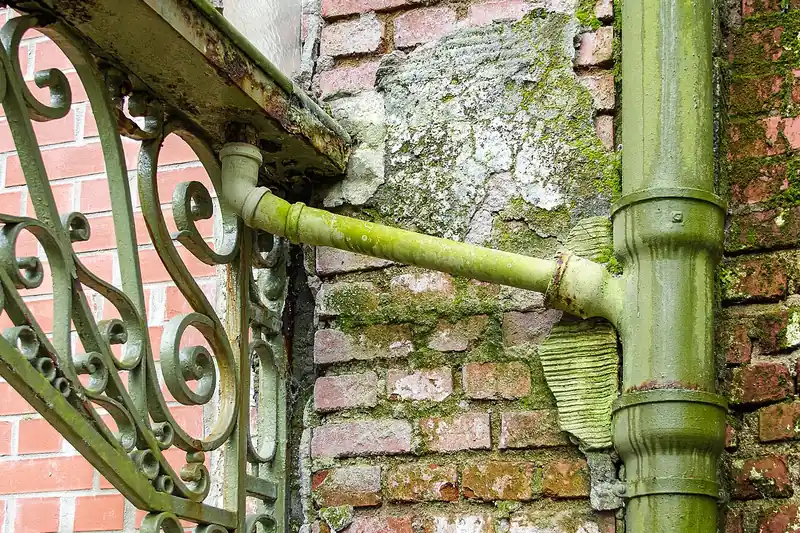
Photo: 001 2006 04 14 Regenwasserableitung by Friedrich Haag, via Wikimedia Commons, CC BY-SA 4.0.
Homeowners often point at a dripping corner or a bent pipe and have no word for it, which makes phone calls and quotes harder than they need to be. Learning the names of the main gutter parts fixes that. Once you can name the channel, the outlet, the elbow and the end cap, you can describe a fault in one sentence, compare two quotes line by line, and order the right piece the first time.
A gutter system has about a dozen named pieces. The channel catches roof water, outlets feed it into downspouts, elbows change direction, end caps and miters close the ends and corners, hangers hold the weight, sealant closes the joints, and guards and splash pieces control overflow and splash at the ground.
Follow the water and the names fall into place. Rain lands on the roof, runs down the slope, and drops into the long open channel fixed along the roof edge. That channel is the gutter itself, sold in 5 inch and 6 inch widths for most homes. Every other piece exists to hold that channel up, close its ends, turn its corners, or move its water safely down and away.
Two more pieces show up on many homes. A hopper head is a small open box at the top of a downspout, seen on older and styled homes, that collects water from a channel or roof outlet before it enters the pipe. A strap or band wraps around the downspout and screws to the wall, keeping the pipe snug so it cannot rattle or pull away in wind.
A system only works if each piece hands the water to the next one without a pause. The channel is fixed with a slight fall, about 1/4 inch over every 10 feet, toward the nearest outlet. That gentle slope is hard to see from the ground, but it is what keeps water moving instead of sitting in pools that breed insects and add weight.
Water weighs about 8.3 pounds per gallon, so a long run full of standing water is a heavy load on small brackets. From the outlet, the flow drops into the downspout, turns through an elbow at the bottom, and lands on soil, a splash block, or the start of an extension. If any link in that chain is missing, blocked or bent shut, the water finds its own path, usually over the front edge or down the wall.
This is why a simple gutter diagram helps when you plan work. Sketch one side of the house, mark each run, each corner, each outlet and each downspout, and you have the full set of gutter system components for that home on one page. Installers build their material lists from exactly that kind of sketch.
The cheapest pieces do some of the most important work. End caps and miters are sealed joints, and every sealed joint is a place water will test in each storm. When a drip appears at a corner, the fault is rarely the channel itself. It is old, cracked sealant inside the miter, or an end cap that was sealed on dirty metal and never bonded well.
Splash control is the other small job with a big effect. Where two roof planes meet in a valley, water arrives fast and in one stream. A plain open channel can let that stream shoot straight over the front lip. A corner splash guard, a short upright shield fixed at that spot, knocks the stream down into the channel where it belongs. The same family of pieces works at ground level, where the shoe of the downspout throws water onto soil and mulch.
Guards that sit over the channel to slow leaves are a separate add on, not part of the base system. The base system has to drain well on its own, with clean joints and clear outlets, before any cover goes on top.
Holding the system up is a quiet contest between water weight and hardware. Hangers clip inside the channel or strap over the top, and they screw or spike into the fascia board behind it. A run that sags between hangers, or pulls away at one end, is telling you the hardware has bent, rusted or worked loose, not that the channel has worn out.
Joining methods split two ways. Sectional systems join short lengths with slip connectors and sealant at each joint, so there are many sealed seams along one wall. Seamless systems form each long run from one piece of metal on site, so the only sealed joints left are at corners and end caps. Fewer joints means fewer leak points, which is the main reason long runs are now formed in one piece where a machine can reach the house.
Downspout sections join by crimping: the top of the lower piece is squeezed slightly so the piece above slides over it, and a screw or rivet locks the lap. Water then flows over the joint, not into it. Fit a lap the wrong way round and the joint weeps in every rain, a small error with a wet wall as the result.
Single small pieces cost little on their own. The money sits in access, ladder time and fitting, which is why owners rarely buy one end cap as a lone job. When pieces are replaced as part of a new system, the published range for installation and replacement is $12 to $25 per foot installed, or $2,200 to $5,000 per home for a full house. A repair visit to reseal joints or swap a damaged section runs $100 to $450 per job.
Treat any published range as a guide only. The actual price for your home is decided after the home is measured, and it should reach you as an itemized written quote fixed before work starts, with each run and fitting listed. Our gutter installation service page shows how a full system is planned and priced, piece by piece, before fitting day.
When you compare quotes, check that both name the same pieces. A low quote that leaves out splash guards at the valleys, or prices fewer downspouts than the sketch shows, is not the same job at a lower price. It is a smaller job, and the missing pieces tend to become change orders later.
A clear report gets a faster, better answer. Note three things: where the piece sits (front left corner, say, or the run over the garage), what it looks like (a plate, a bent pipe, a box), and what the water does there (drips, spills over, or pools). Add the channel width, 5 inch or 6 inch, if you know it, since outlets, caps and miters are sized to match.
Photos help more than long descriptions. One shot from the ground showing the whole wall, and one closer shot of the joint or fitting, let a supplier or installer name the piece with confidence. Keep that habit and spare gutter parts stop being a guessing game: the right cap, elbow or guard arrives the first time, and the ladder goes up once, not twice.
New systems planned, fitted and sealed, with every piece named on the written quote.
See prices and detailsThe brackets and straps that carry the run, and the spacing that keeps it straight.
Read the guideHow to pick a sealant for seams and corners, and how to lay a bead that lasts.
Read the guideHow channel width and profile change the amount of water a run can carry.
Read the guideBrowse every guide on the Gutter Cleaning HQ blog, grouped by topic.
It is the vertical pipe that carries water from the gutter outlet down the wall and out at ground level. Most homes use a 2 by 3 inch or a 3 by 4 inch pipe. Elbows at the top and bottom bend the flow around the roof edge and away from the base of the house.
The outlet is the short tube fitted through a hole cut in the bottom of the channel. Water drops through it into the downspout below. If an outlet is too small or sits in the wrong spot, water backs up in the channel and spills over the front edge during heavy rain.
A miter is the corner piece that joins two runs where the roof turns a corner. Inside miters fit corners that point into the house, and outside miters fit corners that point out. Corners are sealed and screwed or riveted, and they are one of the first places to check when a drip shows up.
It is a short raised shield fitted on top of the channel where water lands hard, most often below a roof valley. The shield stops the fast valley flow from jumping straight over the front edge. At ground level, a splash block does the same kind of work where the downspout lets water out.
Send a photo of the run or the faulty joint. We will name the piece, say what it does, and give you an itemized written quote before any work starts.
Call +1 (888) 295-0648