Service
Gutter Cleaning Service
Full system cleaning with downspouts flushed, debris hauled away, and the price in writing before you book.
See prices and detailsWhy black tiger stripes form on the face of a gutter, which cleaners lift them safely, and the scrubbing and spraying habits that ruin the finish.
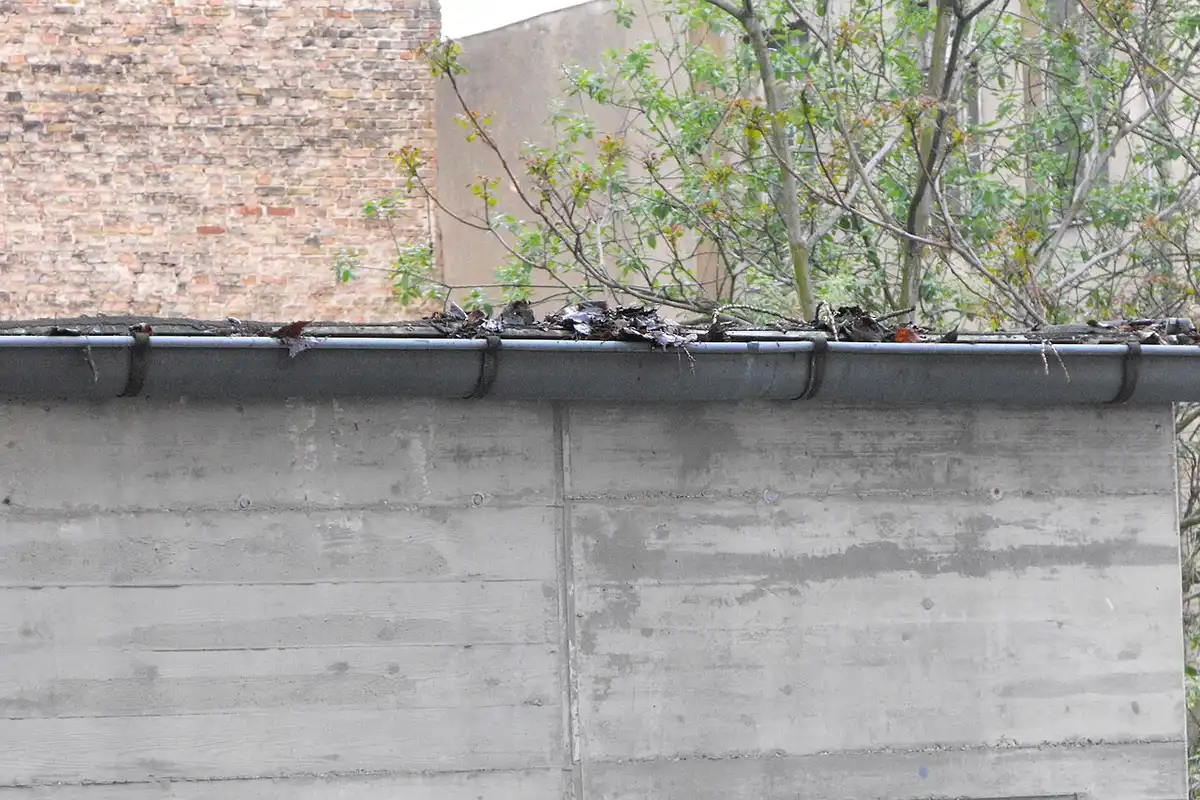
Photo: The Crow and the rain gutter 2 by .js, via Wikimedia Commons, CC BY-SA 3.0.
Cleaning outside of gutters is a different job from clearing the channel, and it is the job most visitors actually see. The inside can be spotless while the face of the run still wears black streaks, green algae and gray grime that make the whole house look tired. Those marks have a specific cause, and they respond to specific cleaners and a soft touch. They also punish the wrong approach: harsh scrubbing and hard spraying strip the finish that protects the metal. This guide explains the streaks first, then the products in plain terms, then a wash method that lifts the marks and keeps the coating.
Wash the outside face with a soft brush, warm water and a cleaner made for gutter exteriors, working in small sections and rinsing often. The black streaks, called tiger stripes, come from asphalt shingle runoff and bond to the finish, so they need a cleaner that breaks that bond, not harder scrubbing.
Tiger stripes are the dark vertical streaks that run down the face of a gutter, spaced like the stripes they are named for. They are not dirt in the simple sense. Rain washing over asphalt shingles carries tiny particles of asphalt, soot and roof grit down onto the gutter face. That runoff bonds chemically with the painted or coated finish, a link trades call electrostatic bonding. Once bonded, the marks resist plain water and soap, which is why a normal wash leaves them untouched.
Other marks have other causes. Green and black patches on shaded runs are algae and mildew feeding on damp grime. Gray dullness is often oxidation, the finish slowly chalking in sun and weather. Rust colored streaks below a joint point to a slow drip from a seam, which is a leak to fix, not a stain to wash. Read the mark before you wash it, and you will pick the right fix the first time.
The method is gentle and unhurried. Wet the whole run first so the cleaner does not dry on a hot or dusty surface. Apply your exterior cleaner with a soft brush or a sponge, working a few feet at a time, and give it the dwell time the label states. Agitate lightly in small circles over the streaks. Rinse each section fully before moving on, because cleaner left to dry leaves its own marks.
Work from a ladder set against the wall, or with a soft brush on an extension pole from the ground for one story runs. Keep your weight and the ladder rails off the channel itself. Wash on a mild, overcast day if you can: strong sun dries cleaner mid section and bakes streaks in, and wind carries rinse water everywhere but the gutter. Finish by rinsing the siding and the plants below, so no cleaner sits where it should not.
Products sold for this job fall into three groups. General exterior house wash handles loose grime and light algae, and is the right start when the face is dirty but not striped. Purpose made gutter cleaners, including the thick brush on cleaner many owners know by the trade nickname gutter butter, are blended to break the asphalt bond behind tiger stripes, and they are the step that actually lifts dark streaks. Gutter whitening products go one step further on stained, dulled finishes: they brighten the surface and even out the tone after the streaks are gone.
Read whitening claims calmly. A whitener can brighten a sound finish. It cannot restore a finish that has chalked through or worn to bare metal, and heavy use can leave a patchy tone on old coatings. Test any new product on a short, low section first, let it dry, and check the result in daylight before you commit the whole roofline. Keep bleach and strong degreasers off the face: both can dull or discolor coatings, and both are hard on the garden below.
A pressure washer, if you use one at all, stays on a wide fan tip at low pressure, well back from the surface. Treat it as a rinsing tool, never as the scrubber. The brush does the cleaning. The water only carries the loosened grime away.
Scouring pads, stiff wire brushes and abrasive powders scratch straight through thin factory finishes, and every scratch becomes a line where the next stain grips harder. Magic style foam sponges can dull a glossy coating the same way. If a mark survives two gentle passes with the right cleaner, it is telling you the finish itself has changed, and paint or replacement, not force, is the remaining answer.
Shortcuts with the hose cause a quieter harm. Blasting upward under the gutter forces water behind the channel and onto the fascia board, the very rot a gutter exists to prevent. Spraying cleaner on a hot, sunny run and letting it dry bakes in white trails. Washing the face while the channel above is still full of sludge just rains dirty water over your clean work, so always clear and rinse the inside first, then wash the outside, top to bottom, last.
The outside wash takes an hour or so on most homes once the channel is clear, which is why it pairs well with a regular cleaning visit. If you hire the inside work out, ask whether an exterior wash can ride along on the same visit and get the answer in the quote, not on the day.
For scale, hired cleaning for most homes runs $100 to $250 per visit, or $0.50 to $2.50 per foot. A published range is a guide only: the actual price for your home is set after it is measured and given as an itemized written quote fixed before work starts. A professional gutter cleaning service clears the channel and flushes the downspouts, and an exterior wash on the same trip leaves the system looking as clean as it now runs. From the street, that face is the part everyone sees.
Full system cleaning with downspouts flushed, debris hauled away, and the price in writing before you book.
See prices and detailsThe ladder method in full, with the setup and work order that keep the job under control.
Read the guidePole tools, blower kits and hose wands that let you clear a channel with both feet on the lawn.
Read the guideThe short list of scoops, tongs, poles and safety gear worth owning, and what you can skip.
Read the guideBrowse every guide on the Gutter Cleaning HQ blog, grouped by topic.
Because their source stays in place. The streaks are washed off the face of asphalt shingles by every rain, so the marks rebuild between washes no matter which cleaner you used. Homes under newer or algae resistant shingles streak more slowly. Expect an annual wash on most shingle roofs, and treat any product promising a permanent fix with doubt.
Household bleach can whiten the surface, but it is a poor trade. It can dull or discolor painted and coated finishes, it harms plants and grass below the drip line, and it runs off into beds and soil. Purpose made exterior gutter cleaners do the same job without those costs, and they are made to be rinsed away safely.
You can, at low pressure and a wide fan tip, standing back from the surface. Up close, high pressure stripes the finish, forces water behind the channel and under the shingle edge, and can dent thin aluminum. A soft brush and a garden hose reach the same result with none of that risk, which is why most crews wash by hand.
Once a year is enough for most homes, often paired with a regular channel clean in spring or fall. North facing runs and homes under trees streak and green over faster and may want a second wash. Wash when you can see the streaks from the street, not by a strict calendar.
Book one visit that clears the channel, flushes the downspouts and leaves the whole system working, with the price in writing first.
Call +1 (888) 295-0648