Service
Gutter Repair Service
Loose and dipped runs rehung into solid wood, with board repairs priced in writing first.
See prices and detailsA dip in the run or a gap behind it is a load and hardware story. What causes it, how to check it safely, and the fix order.
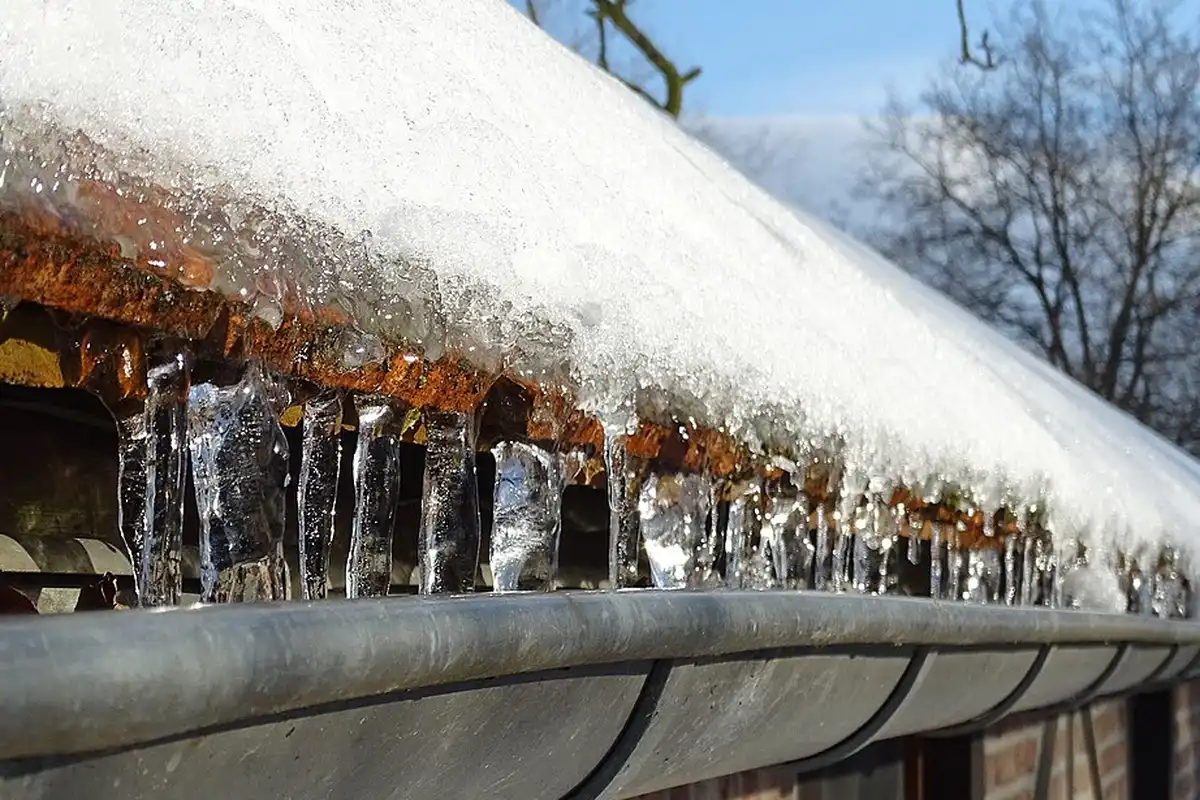
Photo: Overhanging snow and icicles 03 by Ad Meskens, via Wikimedia Commons, CC BY-SA 4.0.
You usually spot it from the driveway: one stretch of the run dips in the middle, holds a puddle after rain, or has opened a shadow gap between the channel and the fascia. Sagging gutters are not a metal problem at first. They are a support problem. The channel is only as strong as the hangers holding it and the wood those hangers bite into, and when either one tires, gravity starts winning an inch at a time.
A run sags when its hangers fail, are spaced too wide, or lose their grip in rotted fascia, often after standing water, wet debris or ice loads the channel. The lasting fix is to support the run, replace failed hangers into solid wood, repair bad board, and reset the slope.
Three causes account for most cases. The first is hanger failure. Old spike and ferrule sets work loose as the spike hole widens in the wood, and cheap brackets bend under load. The second is spacing: hangers set 3 or 4 feet apart leave long spans to carry the full weight alone. The trade standard is about every 2 feet, and closer in snow country. The third is the load itself. A channel full of water and wet leaves is far heavier than the empty metal, and one clogged stretch can hold gallons that were meant to drain. Water alone weighs about 8.3 pounds per gallon, so a blocked 20 foot run can hang an extra hundred pounds or more on tired hardware.
Ice finishes what water starts. A dipped stretch holds water, the water freezes, the ice load deepens the dip, and the deeper dip holds more water next time. Owners in cold states often notice the problem in spring, when the thaw shows a run that no longer falls toward its outlet at all.
A gap behind the channel means the fixings have lost the wood. Sometimes the screws are simply backing out of sound board and can be replaced with longer screws driven into the rafter tails. More often, the fascia behind a long leaking or overflowing stretch has rotted soft, and the screws have nothing left to hold. Pushing the run back up and adding more screws into the same soft board buys weeks, not years.
Check the board before pricing hardware. From a ladder, press along the fascia with a screwdriver and look for soft spots, peeling paint and dark water staining. Sound stretches can take new hidden hangers right away. Rotted stretches need the board cut out and replaced first, with the run taken down, stored flat so it does not kink, and rehung once the new wood is in and painted.
Work from a stable ladder set on firm ground, keep three points of contact, and never lean out sideways to reach one more hanger. The far hanger can wait for the ladder to move.
Lasting repairs follow a set order. First, empty the run and clean it, since no one can judge slope or hardware under sludge. Second, take out failed hangers and any rotted board, and fit new fascia where the wood is gone. Third, snap a fresh chalk line at the standard slope, about 1/4 inch of drop per 10 feet toward the outlet, and rehang the run on hidden hangers at proper spacing, with screws long enough to reach solid wood or rafter tails. Fourth, reseal any joint the movement opened, and run the hose test to prove the fall.
Skipping the board work is the false saving in this job. New hangers in rotten wood fail on the same schedule as the old ones, and each failure bends the channel a little more, until the section itself has to be replaced as well.
One dipped stretch with sound board around it is a clean repair. A whole side dipping at every span, hangers pulling out along the full length, or a channel bent and creased in several places tells a different story: the system is at the end of its working life, and money spent rehanging it is money spent twice. Our decision guide on repair or replacement lays out the signs on each side of that line, including the age and rust checks that settle the question.
For the repair side of the line, a typical visit runs $100 to $450 per job. Use that published range as a guide only, because the actual price is decided after the home is measured and inspected, then given as an itemized written quote fixed before work starts. If your checks show loose hardware along a full side, booking a gutter repair service visit gets the board, hangers and slope judged in one trip, before a hanging run tears free in a storm and takes fascia and siding paint with it.
Loose and dipped runs rehung into solid wood, with board repairs priced in writing first.
See prices and detailsA full channel is heavy, and weight is where most dips and pull aways begin.
Read the guideA run that drops out of line opens its joints, so drips often follow a dip.
Read the guideWater spilling at one low spot is often a slope problem, not a size problem.
Read the guideBrowse every guide on the Gutter Cleaning HQ blog, grouped by topic.
That stretch has lost its grip: screws have pulled out of soft fascia, a spike has worked loose, or the board behind it has rotted. The run hangs from the hangers on either side until they tire too. Refitting needs solid wood to bite into, so board repair often comes first.
If the fascia is sound and the metal is not bent, yes. Lift the run gently to the chalk line, set a new hidden hanger into solid wood, and check the slope with a level. If the channel bottom has taken a permanent bend, the section itself needs replacing.
Yes. Water weighs about 8.3 pounds per gallon, and a long run holding frozen water and snow can carry hundreds of extra pounds. Hangers spaced too wide bow under that load, and each freeze leaves the dip a little deeper than the last.
Press the fascia behind the run with a screwdriver. Sound wood resists; rotted wood lets the tip sink in with a soft, crumbly feel. Also look for peeling paint, dark staining and screws that spin without tightening. All three point to board trouble, not hardware trouble.
Get it inspected before the next heavy rain: hangers, board and slope checked, with any repair priced as one written quote.
Call +1 (888) 295-0648