Service
Gutter Repair Service
See what a repair visit covers, which faults a crew can fix on the spot, and the published price range.
See prices and detailsOne leaking corner does not mean a whole new system, and one cheap patch does not save a system that is worn out. This guide sorts the faults that a repair fixes from the faults that keep coming back.
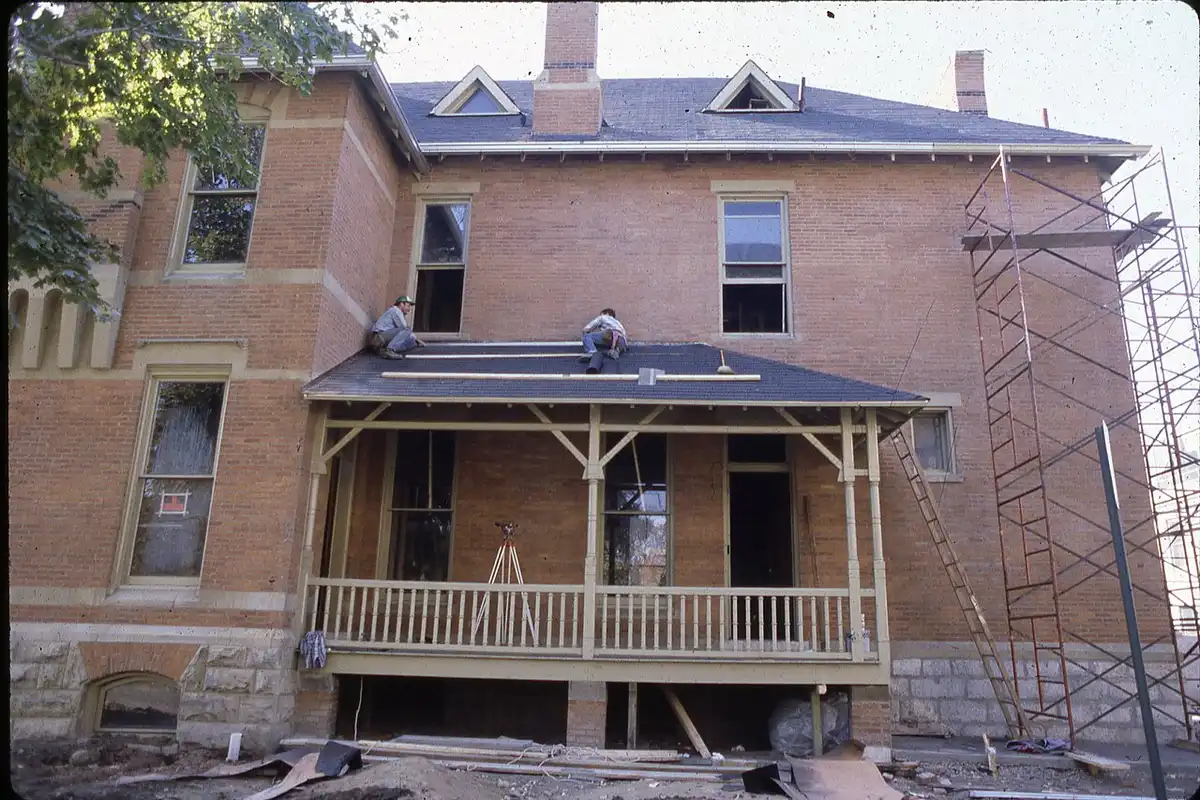
Every homeowner with a leaking, sagging or rusting system faces the same fork in the road: repair vs replace gutters. The salesman at the door will push the bigger job. The handyman may patch anything, even metal that is worn through. Neither answer helps you. The honest answer depends on how much of the system is still sound, and that is something you can check yourself from the ground and with one careful look from a ladder.
Repair the system when the damage sits in one or two places and the rest of the metal is sound. Replace it when rust, sagging or leaks show up in several runs at once, or when the fascia behind it is rotting. Age alone does not decide it. Condition does.
Plenty of gutter faults look dramatic and fix cheaply. A leaking seam or corner is the most common. The sealant inside the joint dries out and cracks over the years, water finds the gap, and you get a steady drip onto the porch. Scraping out the old seal, cleaning the joint and pressing in fresh sealant ends the leak in one visit.
A single sagging run is another repair job. Hangers loosen, a spike backs out, or one bracket bends under a load of wet leaves. The crew lifts the run back to the right slope, about 1/4 inch of fall per 10 feet, and fits new hidden hangers into solid wood. A clogged or dented downspout, a loose elbow, a splash block knocked out of place: all small, all fixable. If faults like these are the whole list, a proper gutter repair visit puts the system right without touching the healthy runs.
Walk the house after rain and count problem spots by run, not by drip. One run with a leak is a repair. Three runs with three different faults is a pattern, and patterns mean the material itself is giving up. Press a thumb along the bottom of the channel where you can reach it. Sound metal feels firm. Metal that flakes, pits or flexes like foil is near the end, and sealing over it buys months, not years.
Check the fascia board, the wood the system hangs from. Paint peeling in one spot can be splash back. Soft, dark, crumbling wood in several spots means water has been getting behind the system for a long time. A new system hung on rotten wood fails fast, so that wood has to be part of the decision either way. Finally, look at slope. A system that ponds water in the middle of every run, even after cleaning, was hung wrong or has sagged along its whole length. Correcting that run by run often costs close to starting over.
Two or three of these together make the call for you. At that point each repair is money spent on a system that will fail somewhere else next season. Reading about what a full new system involves helps you compare the quote for starting over against the growing list of patches, with the same facts on both sides.
Published ranges give you a fair yardstick. A repair job usually runs $100 to $450 per job, depending on how many faults need work and how high they sit. A new system runs $12 to $25 per foot installed, which works out to $2,200 to $5,000 per home for most houses. Seamless runs, formed on site to fit your roofline with no joints along the length, sit inside that same installed range for most homes.
Treat those numbers the right way: a published range is only a guide, and the actual price for your home is decided after the system is measured and handed to you as an itemized written quote that is fixed before work starts. If a quote for patching three tired runs creeps toward half the price of a new system, starting over is usually the better buy, because the new system ends the cycle of call outs instead of renting you a few more seasons.
Ask whoever inspects your system to show you, not tell you. A photo of each fault, taken close, separates a worn out joint from a worn out system in seconds. Ask what the repair guarantees: a sealed seam should stay dry, and a good crew says for how long in writing. Ask what happens if the same run leaks again next spring. Vague answers favor whoever is selling the bigger job.
Ask also what a new system would change beyond the metal itself. Bigger downspouts, 3 by 4 inch instead of the standard 2 by 3 inch, correct old overflow problems that no repair to the channel can fix. Extra hangers on a long run stop the sag that started the trouble. If the honest upgrade list is long, that tells you the old system was undersized or poorly hung, and a like for like patch keeps those flaws.
Clean the system first, or have it cleaned, because half of all faults vanish with the debris. Then note what still leaks, sags or overflows in the next rain. Get two written numbers: the repair list priced item by item, and the new system priced by the foot with downspouts and hangers listed. Compare them against the count of problem runs from your walk around. One or two faults on sound metal: repair with confidence. Faults on most walls of the house: put the money into the new system once, and stop paying for the same argument every year.
See what a repair visit covers, which faults a crew can fix on the spot, and the published price range.
See prices and detailsLifespan ranges for aluminum, vinyl, steel and copper, and the signs that a system is near the end.
Read the guideWhat a working system protects, from fascia boards to foundations, and when a house can manage without one.
Read the guideThe questions that sort careful crews from pressure sellers before you sign anything.
Read the guideBrowse every guide on the Gutter Cleaning HQ blog, grouped by topic.
Yes, if the rest of the system is sound. A single bent, cracked or rusted run can be cut out and matched with new material of the same size and profile. The new piece will look brighter than the old metal for a while, but it works the same and costs far less than a full new system.
No. Corner and seam leaks are often just failed sealant. The old seal is scraped out, the joint is cleaned and dried, and new sealant is pressed in. That is a small repair. A leak only points to a bigger job when the metal around the joint has rusted thin or pulled apart.
Pulling away usually means the hangers have failed or the fascia board behind them has rotted. New hidden hangers screwed into solid wood fix the first case. If the board itself is soft and crumbling, that wood has to be replaced first, because no hanger holds for long in rotten timber.
Fix the visible faults that an inspector would flag: leaks, sagging runs, loose downspouts and overflow stains. Those are honest, low cost repairs. A full new system is rarely worth it just for a sale unless the old one is failing in several places and would scare buyers away during showings.
Ask for a photo of each fault, a price for the repair, and a price for a new system. With both numbers in writing, the right choice is usually obvious.
Call +1 (888) 295-0648